International Conference on Agricultural and Veterinary Sciences and Their Modern Technologies
(ICAVSMT)
Under the slogan
Agricultural and veterinary sciences: Modern scientific insights for sustainable food security
Conference Date
21 March 2027
Conference Venue
Language Center - Sebha University

About the Conference

Sebha University · The Premier Scientific Event in Southern Libya

The International Conference on Agricultural and Veterinary Sciences and Their Modern Technologies at Sebha University seeks to serve as a specialized scientific platform that brings together researchers, academics, experts, and decision-makers from various agricultural disciplines and related fields. The conference aims to facilitate the exchange of knowledge and expertise, as well as to discuss the latest scientific and technological advancements in agriculture, animal production, and food security. It also strives to strengthen research collaboration between academic institutions and executive bodies, thereby contributing to the development of the agricultural and veterinary sectors and enhancing their productivity and efficiency.
The organization of this conference stems from the growing need to support applied scientific research and to align it with the practical challenges facing the agricultural sector, particularly in arid and semi-arid regions. In this context, Southern Libya occupies a position of strategic importance as one of the country's key regions, endowed with significant agricultural potential, natural resources, and promising opportunities that qualify it to play an effective role in supporting agricultural production and achieving national food security.

Southern Libya: A Pillar of Agricultural Expansion

Southern Libya represents a vital pillar for agricultural expansion and sustainable development, particularly in light of the environmental and climatic challenges facing other agricultural regions of Libya. Its vast land resources and promising agricultural potential position it as a strategic area capable of supporting agricultural growth and contributing significantly to the achievement of national food security.
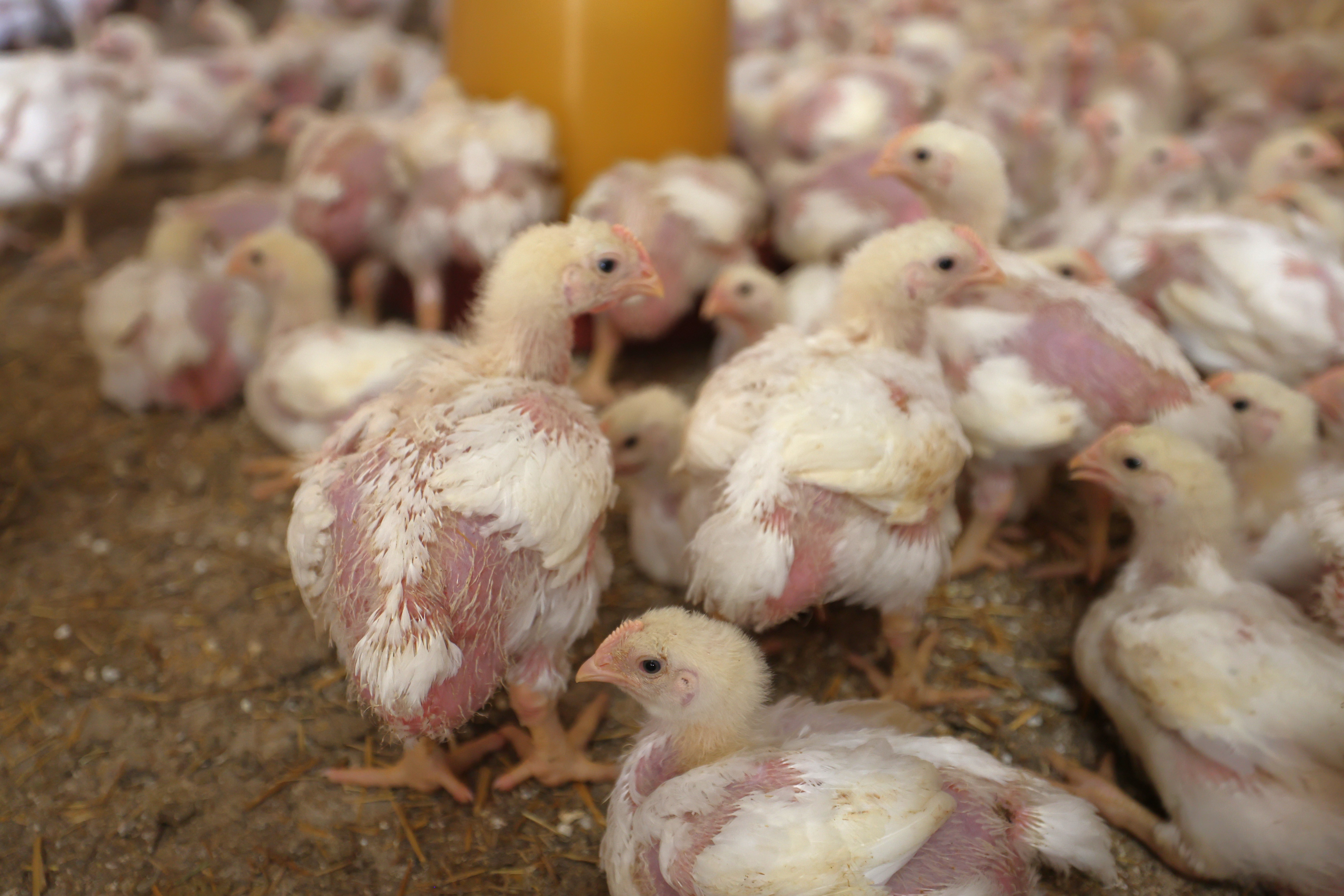
Photos from Sebha farms

Vision

To achieve leadership in fostering integration between agricultural and veterinary sciences and modern technologies, and to establish an international scientific platform that supports research, innovation, and knowledge exchange in pursuit of sustainable agricultural development and effective food security at both national and international levels, while highlighting the strategic role of the Fezzan region in Libya's agricultural development.

Mission

The International Conference on Agricultural and Veterinary Sciences and Their Modern Technologies aims to bring together researchers, academics, experts, and decision-makers from diverse related disciplines to exchange knowledge and scientific expertise, discuss the latest technologies and research trends in agriculture, animal production, and food security, and foster scientific and applied partnerships that contribute to addressing environmental and climate-related challenges. The conference also seeks to support sustainable development and enhance the efficiency and resilience of the agricultural sector in Libya and other arid and semi-arid regions.

Conference Objectives

Objectives
  • 1
    Promote scientific research in the fields of agricultural sciences and related interdisciplinary areas.
  • 2
    Strengthen integration and collaboration among agricultural, environmental, and veterinary disciplines.
  • 3
    Provide a platform for knowledge exchange and experience sharing among researchers, academics, and institutions.
  • 4
    Link scientific research outcomes to the needs of society and the agricultural sector.
  • 5
    Support food security initiatives and advance the principles of sustainable development.

Importance of the Conference

The significance of this conference lies in its focus on strategic issues that directly affect food security and economic stability, particularly in the face of challenges associated with climate change, water scarcity, and land degradation. The conference also reflects Sebha University's role as a leading academic institution committed to serving the community and promoting sustainable development in Southern Libya.
🌾 Sebha University: A Pillar of Development in Southern Libya

Conference Scope

1
Plant Production
2
Animal Production
3
Veterinary Medicine and Animal Health
4
Soil and Water Sciences
5
Food Industries
6
Agricultural Economics
7
Agricultural Biotechnology
8
Sustainability and Food Security

Conference Tracks

1
Sustainable Plant Production and Agricultural Technologies for Food Security
• Agricultural technologies and crop improvement
• Ecological agriculture and enhancing sustainability under stress conditions
• Integrated pest management (IPM), including the evaluation of its effectiveness and environmental impact
2
Animal Production and Veterinary Medicine
• Veterinary health and the role of veterinarians in ensuring food security
• Animal nutrition and its contribution to achieving food security
• Reproduction and genetic improvement of animal breeds
3
Soil, Water, and Environmental Sciences
• Soil fertility and the role of organic matter in improving soil properties
• Desertification and land reclamation; climate change and its impacts on agricultural systems
• Soil and water pollution and strategies for its mitigation
• Applications of Geographic Information Systems (GIS) and remote sensing in the management of soil, water, and agricultural environments
4
Food Science and Technology
• Food safety and quality
• Modern food processing technologies
• Food security strategies and the enhancement of food production
5
Agricultural Economics and Agricultural Extension
• Food security and sustainable rural development
• Agricultural investment and its role in achieving economic development
• Economics of agricultural production and marketing, and improving production efficiency
• Agricultural extension and its role in the adoption and transfer of modern technologies
6
Agricultural Engineering
• Irrigation systems engineering and water-use efficiency
• Protected agriculture, hydroponics, and aeroponics
• Renewable energy and agricultural infrastructure
• Agricultural mechanization suitable for sandy environments
• Modeling and artificial intelligence applications in agricultural engineering
• Livestock engineering and animal production systems

Target Audiences

Faculty members and researchers
Agricultural engineers and veterinarians
Agricultural institutions and organizations
Private sector and investors

Conference Frequency

The conference will be held on a regular basis, ensuring the continuity of scientific output and the accumulation of knowledge.

Conference Outcomes

Issuing practical and actionable scientific recommendations
Strengthening research and institutional partnerships

Future Vision

The conference aspires to become a leading scientific platform at both the national and international levels.

Call for Participation

Sebha University cordially invites researchers, academics, experts, and decision-makers to participate in the conference, which aims to bring together specialists from diverse fields to discuss the latest scientific and technological developments and to exchange knowledge and expertise in areas related to agricultural and veterinary sciences and their modern technologies.

Types of Contributions

Full Research Papers
Scientific Abstracts for Oral Presentations or Poster Sessions
Workshops and Training Courses
Company Presentations and Innovative Technologies

Participation Terms and Conditions

1
The submitted research must be original and innovative, and must not have been previously published, accepted for publication, or presented at any other conference or scientific event.
2
The researcher must adhere to rigorous scientific methodology and research ethics in preparing, writing, and properly referencing the study.
3
Any use of artificial intelligence tools in the preparation, writing, or editing of the manuscript must be disclosed in accordance with the guidelines approved by the conference scientific committee.
4
The plagiarism rate must not exceed 20%, as determined by the conference-approved plagiarism detection software.
5
The research topic must fall within one of the approved conference themes.
6
Submissions are accepted in either Arabic or English.
7
All submitted papers will undergo a double-blind peer review process by specialized reviewers, and the decision of the scientific committee regarding acceptance or rejection shall be final.
8
Authors must prepare their manuscripts according to the official conference template and submission guidelines.
9
Authors are required to implement any revisions requested by reviewers or the scientific committee within the specified timeframe.
10
Papers must be submitted in Microsoft Word format via the conference management system or the official email.
11
Manuscripts must be between 5 and 10 pages, including tables, figures, and references.
12
The scientific committee reserves the right to reject any paper that does not meet the scientific, technical, or organizational requirements of the conference without providing justification.
13
All contributing authors must be registered in the conference management system (CMT3) at the time of submission. Adding, removing, or changing author names or order after acceptance is not permitted unless approved by the scientific committee.
14
Authors bear full responsibility for the scientific content of their work, including any violations of academic integrity or intellectual property rights.
15
By submitting a paper, the author agrees to publish accepted papers in the conference proceedings, electronic repository, or any publication platform approved by the conference.
16
Submission of a paper constitutes acknowledgment that the author has read, understood, and fully agrees to abide by the conference terms and conditions.

Plagiarism Acceptance Criteria (20%)

The following conditions must be met for the acceptance of the plagiarism rate:

1

No Extended Verbatim Copying

  • The permitted similarity percentage must not include the verbatim reproduction of entire pages, chapters, or long paragraphs from a single source or multiple sources.
  • Direct copying of texts is not allowed, even if the overall similarity percentage falls within the acceptable limit.
2

Scientific Distribution of Similarity

Similarity must be naturally distributed across different sections of the research paper as a result of:

  • Scientific terminology
  • Names of methods and procedures
  • Specialized definitions
  • Names of scientific instruments and materials
  • Standard references and commonly accepted scientific titles
3

Limitation of Continuous Similarity

  • There must be no continuous verbatim textual overlap within a full paragraph or across multiple consecutive paragraphs without proper paraphrasing and scientific analysis by the researcher.
  • The similarity from a single source must not exceed the limit set by the relevant scientific committee or authorized academic body.
4

Priority of Analysis and Paraphrasing

The research must reflect the researcher's scientific identity and their ability to analyze and draw conclusions, rather than merely compiling or reproducing information.

5

Scientific Referencing Integrity

All quotations and borrowed information must be properly documented in accordance with the citation style approved by the faculty or university.

Submission Requirements

📄 Submission Requirements

Abstract: (250–300 words)
Full Paper: (not exceeding 10 pages)

📚 Presentation and Publication

Submissions may be presented either in person or virtually
Accepted papers will be published in the conference proceedings book
Participation certificates will be awarded to researchers

Important Dates

Conference Announcement

Launch of call for participation and registration

21 June 2026
30 November 2026

Submission Deadline

Final date for submitting abstracts and full papers

Acceptance Notification

Acceptance or rejection notices after review

21 January 2027
21 March 2027

Conference Date

Conference events at Sebha University Language Center

Conference Committees

Committee Chairs

Dr. Abdelsalam M. A. Alkirtawi

Chair of Scientific Committee

CV

Dr. Mohamed Al-Salem M. Al-Salem

Chair of Organizing Committee

CV

Dr. Hassan S. A. Al-Gaddafi

Chair of Technical Committee

CV

Committee Members

Scientific Committee

Organizing Committee

Technical Committee

Microsoft CMT

Conference management and peer-review system

The Microsoft CMT service was used for managing the peer-reviewing process for this conference. This service was provided for free by Microsoft and they bore all expenses, including costs for Azure cloud services as well as for software development and support.

Contact the Conference

Email

[email protected] Response within 7-24 hours

WhatsApp

WhatsApp Chat Group Response within 1-4 hours 24/7

Official Working Hours

Sunday – Thursday8:00 AM – 9:00 PM
Saturday9:00 AM – 2:00 PM
FridayOfficial Holiday

Important Notice

When contacting us, please include your full name, institution, and the subject of your inquiry clearly to help expedite the response process.

Immediate Support

WhatsApp: 24/7 Availability

For inquiries submitted outside official working hours, responses will be provided on the next working day.

Conference Venue

Sebha University Language Center

The conference will be held at the Language Center of Sebha University, one of the largest and most prominent facilities at the university in terms of infrastructure and modern amenities.

The center features a spacious main auditorium with a seating capacity of approximately 500 participants, equipped with advanced sound and lighting systems as well as modern presentation technologies that meet the requirements of scientific conferences and academic events. In addition, the center includes a number of supporting halls and integrated service facilities, providing an ideal environment for hosting participants, researchers, and guests.

Photo Gallery

العربية