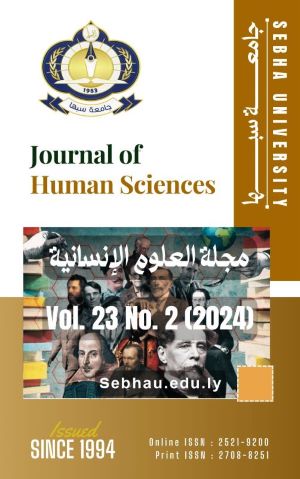
The ideological nature of the Negritude and Afrocentrism movements
DOI:
https://doi.org/10.51984/johs.v23i2.3496Keywords:
Negritude, Afrocentricity, Colonialism, RacismAbstract
This study aimed to explore the Negritude and Afrocentrism movements, identify their most prominent leaders, and examine the historical conditions and motivations that led to their emergence. It also investigated their vital role in critiquing the racist colonial experience and in challenging the negative stereotypes imposed on African peoples by the exclusionary Western-centric ideology and its colonial discourse. Furthermore, the study highlighted the efforts to cultivate African liberation consciousness, achieve independence and unity, and lay the foundation for African intellectual, political, and literary perspectives that address the concerns of the African people and express their aspirations for freedom and emancipation, free from the exclusion and marginalization they have endured for a long time.
Downloads
Downloads
Published
License
Journal of Humanities Policy on Intellectual Property and Plagiarism
1. Commitment to Intellectual Property and Ethics
The Journal of Humanities (JOHS) is fully committed to respecting intellectual property rights and aims to protect the originality and authentic work of authors who submit their manuscripts for publication. The journal takes a firm stand against articles that contain any form of plagiarism and emphasizes the need for all researchers to adhere to the highest ethical standards in scientific research.
2. Anti-Plagiarism Policy
The journal considers plagiarism a serious violation of academic ethics. Therefore, authors must ensure that their work is original and not plagiarized, and that any use of external sources is properly cited and documented according to correct academic standards.
-
Actions Taken: In the event that any plagiarism or academic theft is discovered in a submitted article, the editorial board will contact the author to request a formal explanation within a maximum period of two weeks from the date of notification.
-
Investigation and Decision: After receiving the explanation, the article will be referred to the journal's specialized committees, which will investigate the matter and take the necessary measures, which may include the permanent rejection of the article and the imposition of disciplinary actions.
3. Publication License and Author Rights
The journal adopts the Creative Commons license type Attribution-NonCommercial-NoDerivs 4.0 International (CC BY-NC-ND 4.0), which allows for the following:
-
Attribution: Users are entitled to cite the content published in the journal and use it in their work, provided that the original source and author are clearly credited.
-
Non-Commercial: The published content may not be used for any commercial purpose.
-
NoDerivs: It is not permitted to make any modifications, distortions, or to build derivative works from the published content.
Under this license, authors are required to complete an exclusive license agreement for the journal. Authors retain the rights to their research data and may reuse and share their work for scientific purposes with proper citation.