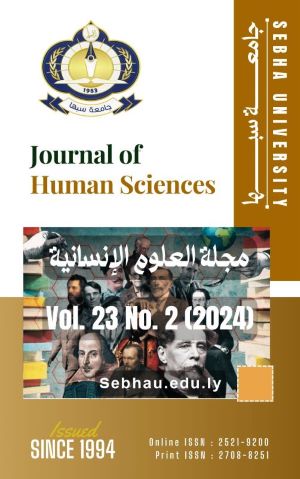
Integrating Arthur Miller's Death of a Salesman (Play and Film) into Language Education: A Classroom Investigation
DOI:
https://doi.org/10.51984/johs.v23i2.3625Keywords:
metalinguistic features, Technology, Youtube, Film clips, ExtractsAbstract
Students today enjoy watching short films on YouTube using their mobile phones and other devices. Consequently, English teachers can guide their students in utilizing these technological tools to enhance their understanding of drama. Current learners are digital natives, familiar with technology, which highlights the importance for English teachers to integrate visual aids into their teaching strategies, especially when teaching English as a foreign language. Teachers should focus on key literary techniques, such as figures of speech, style and context, and narrative structure, to enhance students' analytical skills. Exploring character development and relationships, as well as encouraging the identification of themes and symbols, further deepens students' comprehension. By emphasizing these areas, educators can cultivate a richer understanding of literature. Many students feel overwhelmed by the linguistic complexity of literary texts. However, they have the opportunity to appreciate film adaptations of well-known dramas in English. An effective way to understand and value literary texts is through careful analysis of their language and components. Language teachers should help students recognize how the text functions and the specific meanings it conveys. One approach is to select a passage from a drama and pair it with a corresponding film clip. For instance, an extract from Arthur Miller's *Death of a Salesman* can be used in this way. The findings of the study indicated that the majority of students believe that viewing the film enhances their understanding of the drama. They also found the drama/film (D/F) technique particularly helpful, as it improves both their linguistic and metalinguistic skills, preparing them to better comprehend the visual elements on screen.
Downloads
Downloads
Published
License
Journal of Humanities Policy on Intellectual Property and Plagiarism
1. Commitment to Intellectual Property and Ethics
The Journal of Humanities (JOHS) is fully committed to respecting intellectual property rights and aims to protect the originality and authentic work of authors who submit their manuscripts for publication. The journal takes a firm stand against articles that contain any form of plagiarism and emphasizes the need for all researchers to adhere to the highest ethical standards in scientific research.
2. Anti-Plagiarism Policy
The journal considers plagiarism a serious violation of academic ethics. Therefore, authors must ensure that their work is original and not plagiarized, and that any use of external sources is properly cited and documented according to correct academic standards.
-
Actions Taken: In the event that any plagiarism or academic theft is discovered in a submitted article, the editorial board will contact the author to request a formal explanation within a maximum period of two weeks from the date of notification.
-
Investigation and Decision: After receiving the explanation, the article will be referred to the journal's specialized committees, which will investigate the matter and take the necessary measures, which may include the permanent rejection of the article and the imposition of disciplinary actions.
3. Publication License and Author Rights
The journal adopts the Creative Commons license type Attribution-NonCommercial-NoDerivs 4.0 International (CC BY-NC-ND 4.0), which allows for the following:
-
Attribution: Users are entitled to cite the content published in the journal and use it in their work, provided that the original source and author are clearly credited.
-
Non-Commercial: The published content may not be used for any commercial purpose.
-
NoDerivs: It is not permitted to make any modifications, distortions, or to build derivative works from the published content.
Under this license, authors are required to complete an exclusive license agreement for the journal. Authors retain the rights to their research data and may reuse and share their work for scientific purposes with proper citation.